

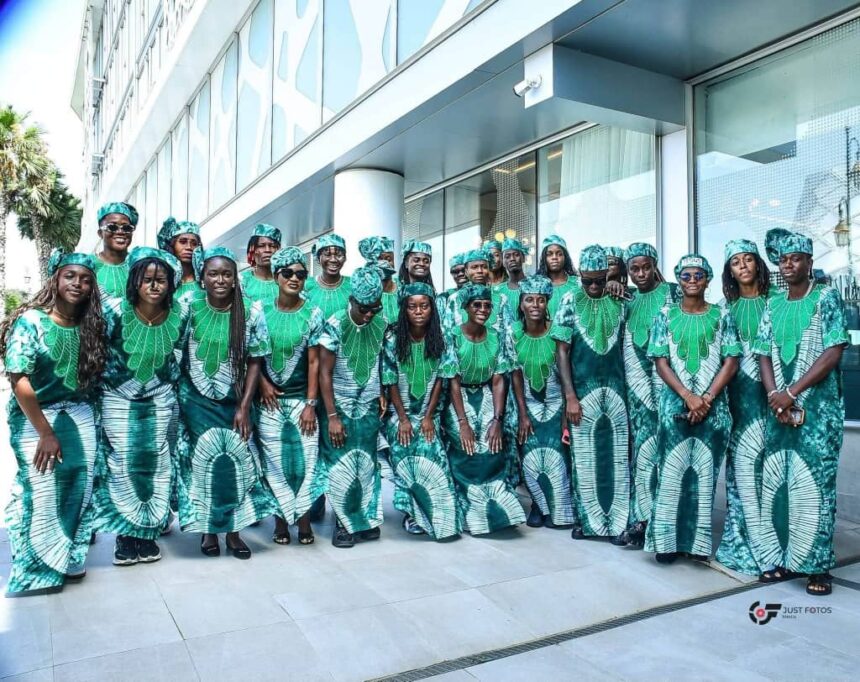
The 2026 Women’s Africa Cup of Nations (WAFCON) in Morocco has offered more than football, with African women footballers using fashion to showcase their identities, cultural heritage and personalities away from the pitch.
Nigeria’s Super Falcons set the tone before their opening match, arriving in Rabat wearing coordinated green-and-white Adire, bringing a distinctly Nigerian touch to their tournament appearance.
The outfits, featuring tie-dye patterns and embroidered panels, drew attention online, with Esther Okoronkwo, Jennifer Echegini and Michelle Alozie sharing a light-hearted video tagged “Rich Aunty Vibes”.
Goalkeeper Chiamaka Nnadozie also joined the trend with photographs, poses and comic skits, while Tosin Demehin and Folashade Ijamilusi shared images of the team’s traditional attire.
The moment highlighted the growing role of fashion for African women footballers, where players increasingly use their public profiles to promote culture and personal identity.
The fashion moments surrounding WAFCON 2026 reflect a wider development in African women’s sport, as players are increasingly using their visibility to promote fashion, culture, business and social causes, while major tournaments provide an international platform for those messages.
Super Falcons’ Adire
Adire, a hand-dyed textile with deep roots in south-western Nigeria, has gained renewed attention in Nigerian fashion and on international platforms.
ALSO READ: 5 matchday traditions that make football special
The Super Falcons’ choice of the fabric for a major continental tournament provided another opportunity to showcase Nigerian craftsmanship to audiences across Africa and beyond.
For the players, the coordinated outfits also offered a way to present a unified team identity before they returned to the more familiar setting of the football pitch.
Oshoala’s off-field style
Nigeria’s Asisat Oshoala has also established herself as one of African football’s most recognisable fashion figures.
The six-time African Women’s Footballer of the Year has frequently appeared in tailored suits and other distinctive outfits at award ceremonies and public events.
Oshoala has previously explained that comfort influences her fashion choices.
“My outfit is determined by how I feel, and the comfort I derive from them. But I like putting on mini-skirts, gowns, shorts, you know, anything that I’m just comfortable in,” she said.
Her profile has also extended into commercial partnerships, including her appointment as an Amstel Malta brand ambassador in 2026.
Kgatlana’s individual style
South Africa’s Thembi Kgatlana is another African footballer known for expressing her personality through her appearance away from the pitch.
The forward has developed a distinctive public image, with her fashion choices adding another dimension to her profile as one of South Africa’s leading footballers.
Like several of her peers, Kgatlana uses major football events as opportunities to present a style that blends contemporary fashion with her African identity.
Chawinga sisters bring Malawi to the fore
Malawi’s Tabitha and Temwa Chawinga have also become increasingly visible on the international stage, with their appearances offering another glimpse of Malawian identity and style.
The sisters, who have built careers in major women’s football leagues, have carried their visibility beyond matchdays through their public appearances and social media presence.
Their growing international profile has given Malawian fashion and cultural identity another platform at a tournament watched across Africa.
Banda’s bold presence
Zambia captain Barbra Banda is another prominent figure in African women’s football whose public image extends beyond the pitch.
The striker has developed a strong personal brand through her appearances for club and country, with her off-field presentation contributing to her profile as one of the continent’s most recognisable footballers.
Her fashion presence reflects the growing influence of African female athletes in shaping how women’s sport is presented to a wider audience.
Chebbak represents Moroccan style
Morocco’s Ghizlane Chebbak brings a home-grown dimension to the tournament’s fashion conversation.
As one of the country’s most prominent footballers, Chebbak has become a familiar face of Moroccan women’s football, with her appearances during the home tournament placing her at the centre of attention both on and off the pitch.
Her presence also adds a Moroccan perspective to a tournament where players from across Africa are showcasing different approaches to fashion and cultural identity.