

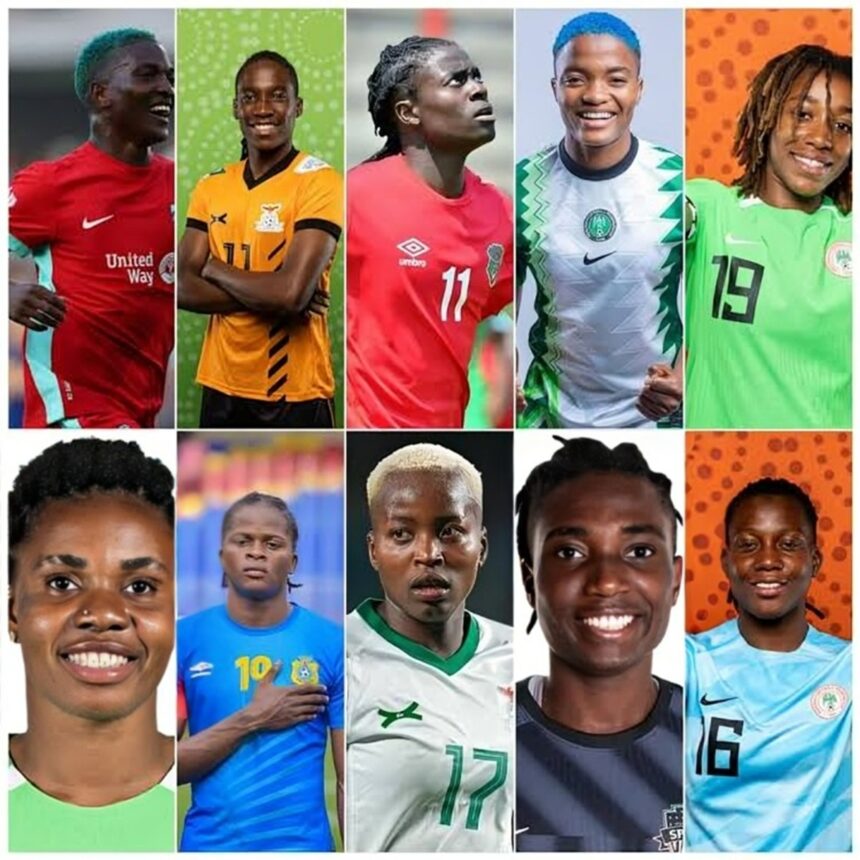
The women’s football transfer market has recorded a sharp rise in spending in recent years, with African players featuring prominently in some of the biggest deals.
The change became particularly visible in February 2024 when Zambia international Racheal Kundananji moved from Madrid CFF to Bay FC for a reported $785,000, making her the most expensive female footballer in the world at the time.
Only weeks later, another Zambian, Barbra Banda, joined Orlando Pride from Shanghai Shengli for a reported $740,000.
The two deals came as international transfers and spending in women’s football continued to rise.
FIFA recorded 1,888 international transfers involving professional women’s players in 2023.
The figure increased to 2,284 in 2024, while spending on international transfer fees rose from about $6 million to $15.6 million.
In 2025, the number of international transfers increased to 2,440, while spending reached a record $28.6 million, more than 80 per cent higher than in 2024.
The growth had started before Kundananji’s record move.
A market already on the rise
FIFA recorded 1,555 international transfers involving professional women’s players in 2022. That increased to 1,888 in 2023, representing growth of more than 20 per cent.
The number of clubs involved also rose from 507 in 2022 to 623 in 2023.
During the June-to-September 2023 registration period, women’s clubs completed 829 international transfers, including 66 involving a fee.
FIFA said both figures were records, while fee-paying transfers increased by 83.3 per cent from the same period the previous year.
ALSO READ: WAFCON 2026: How African women footballers are redefining fashion
Spending during the registration period reached $3 million, more than twice the amount recorded during the corresponding period in 2022.
The women’s football transfer market was therefore expanding before Kundananji’s move to Bay FC.
Her transfer, however, gave the growth a new face.
Kundananji breaks the record
Kundananji’s move to Bay FC came weeks after Chelsea reportedly paid €450,000 for Colombian international Mayra Ramírez, setting a new women’s world transfer record.
Kundananji then raised the figure to around $785,000.
Her agent, Christopher Atkins, said the fee reflected the qualities she brought to the pitch.
Atkins said few players could combine one-on-one ability, goalscoring and the capacity to break down organised defences in the way Kundananji could.
He also spoke about perceptions of African players in women’s football.
“There’s been some stereotypes that have persisted in women’s football about African players,” Atkins said.
He said African players had sometimes been viewed through a limited lens rather than as complete players capable of competing at the highest level.
Kundananji’s transfer put an African player at the top of the global women’s transfer market.
Banda follows
The record did not stand for long as in March 2024, Zambia forward Barbra Banda joined Orlando Pride from Shanghai Shengli for a reported $740,000.
Banda became the second-most expensive women’s player in the world at the time.
The two biggest transfer fees were therefore attached to players from the same African country.
Nigeria’s Asisat Oshoala later joined Bay FC from Barcelona for a reported $162,000, while Malawi’s Temwa Chawinga also moved into the NWSL.
The movement of African players into major leagues added to the growing visibility of the continent’s women’s footballers.
Spending more than doubles
The FIFA figures show how quickly spending increased.
Women’s international transfer spending reached $15.6 million in 2024, compared with about $6 million in 2023.
The number of international transfers also increased from 1,888 to 2,284.
The number of clubs involved rose to 695, while the number of clubs spending money on incoming players increased by 23.9 per cent.
In 2025, transfer spending reached $28.6 million, an increase of more than 80 per cent from the previous year.
The number of international transfers rose by 6.3 per cent to 2,440.
FIFA recorded 756 clubs involved in international transfers in 2025. Of those, 135 spent money on at least one incoming transfer, while 155 received transfer fees for outgoing transfers.
January 2025 sets another record
The growth continued into the January 2025 transfer window.
Women’s clubs spent $5.8 million on international transfer fees during the month, according to FIFA. That was an increase of 180.6 per cent from January 2024.
There were also 455 international transfers, 22.6 per cent more than the previous January record.
January 2025 was also the first women’s transfer window in which clubs completed transfers involving fees of more than $1 million.
Less than a year earlier, Kundananji’s $785,000 move had set a world record.
The market had already moved beyond that figure by January 2025.
Kundananji expected the record to fall
Kundananji did not expect her record to remain untouched.
After her transfer, she said she wanted to put the attention surrounding the fee behind her and concentrate on football.
“I need to be focused on football and forget about the transfers and everything because it has happened,” Kundananji said.
She also predicted that another player would eventually break the record.
“Now it is time for someone else to break that record,” Kundananji said. “Maybe it will be me again, or maybe it will be another person.”
Banda’s move came only weeks later.
African players gain greater visibility
CAF Head of Women’s Football, Meskerem Tadesse Goshime, has also spoken about the growing international movement of African players.
Goshime said the development was the result of years of work.
“It’s the result of several years of work,” Goshime said. “Our players have always had talent. Now, the world is watching.”
She identified Kundananji, Banda and Merveille Kanjinga among players who developed in African football before moving to major international clubs.
Goshime also credited Nigerian star Asisat Oshoala with helping create a pathway for younger African players.
“Pioneers like Asisat Oshoala paved the way,” Goshime said.
Kundananji and Banda began their careers in African football before moves to clubs in Kazakhstan, Spain, China and elsewhere took them into bigger international markets.
Their transfers came as the women’s football transfer market expanded beyond the earlier levels of spending.
What happens to the money?
The increase in transfer fees also raises questions about the financial benefits that can reach African football.
Transfer fees are paid between clubs and do not simply become players’ personal income.
Higher transfer values can, however, increase a player’s earning power, commercial value and visibility. Clubs and academies involved in developing players can also benefit through applicable training compensation and solidarity mechanisms.
Goshime said transfers could create wider economic opportunities for African football.
“Transfers present real economic opportunities,” Goshime said, pointing to FIFA’s solidarity and training compensation mechanisms as ways clubs involved in developing players can potentially benefit when those players move abroad.
She also said the impact could extend beyond transfer fees.
“These moves boost visibility, attract sponsors, enhance club branding, and allow reinvestment in training and infrastructure,” Goshime said.
For African clubs and academies, the financial return from developing players can therefore extend beyond the initial transfer.
From $6 million to $28.6 million
FIFA’s figures chart the rise in spending over three years.
In 2022, the organisation recorded 1,555 international transfers involving professional women’s players.
In 2023, the number rose to 1,888, while transfer spending stood at roughly $6 million.
In 2024, international transfers increased to 2,284 and spending reached $15.6 million. That was also the year Kundananji broke the world transfer record, followed by Banda’s reported $740,000 move.
In January 2025, clubs spent $5.8 million in one month, an increase of 180.6 per cent from January 2024. The window also produced the first transfers involving fees above $1 million.
By the end of 2025, annual international transfer spending had reached $28.6 million, while the number of transfers stood at 2,440.
That meant transfer spending had increased by roughly four and a half times between 2023 and 2025, while the number of transfers rose by about 29 per cent.
Kundananji did not create the growth. The market was already expanding before her move to Bay FC.
But her record transfer, followed by Banda’s move, gave the rise in the value of African players a prominent place in the global game.
The numbers that followed showed how quickly the market moved beyond the figures that had once represented its upper limit.
For African women’s football, the focus now extends beyond individual transfer records to the potential financial benefits for clubs, academies and player-development structures on the continent.

