

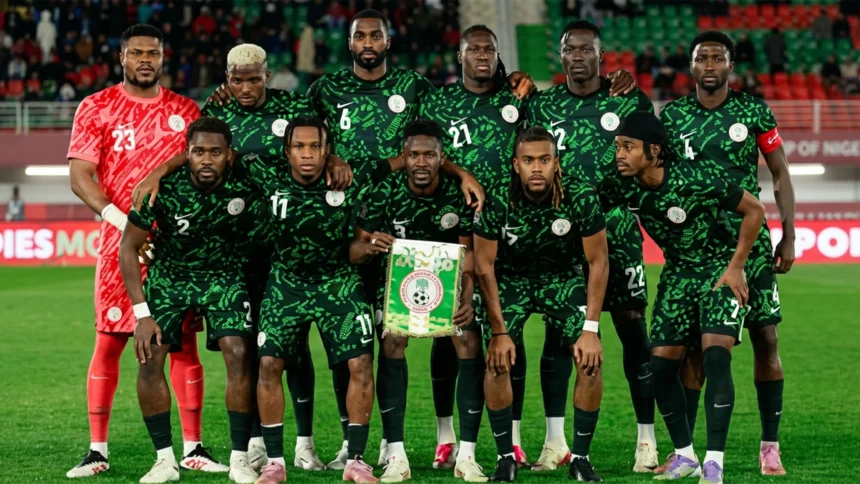
Nigeria’s Super Eagles are heading into a run of important Africa Cup of Nations qualification matches following a stretch of inconsistent results, with the team’s form under scrutiny as the 2027 tournament draws closer. The mixed outcomes in recent fixtures have added pressure on the squad to deliver stronger performances as qualification continues. Nigerian football followers have watched closely as the team navigates a demanding qualifying schedule.
Among the bright spots in recent weeks was a win over Madagascar in an AFCON 2027 qualifier, a match in which the Super Eagles took the lead through goals from George Ilenikhena and Moses Usor. That result offered a measure of reassurance after a period in which Nigeria’s qualifying form had looked uneven. The squad has also had to contend with absences, including injury setbacks that have tested the depth of the group heading into subsequent fixtures.
Ilenikhena’s contribution has drawn particular attention given his profile heading into the squad. The striker, who plays his club football for Al-Ittihad in the Saudi Pro League, received his first call-up to the Super Eagles for the 2027 qualifiers and scored on his debut in the win over Madagascar. His emergence adds another option to a forward line that Nigeria will need as the qualifying campaign progresses.
Captain William Troost-Ekong has remained a central figure in Nigeria’s recent AFCON campaigns, continuing to lead the side through this qualifying cycle. Troost-Ekong, who plays his club football for Saudi Arabian side Al-Kholood FC, is among several Super Eagles players whose club careers are based in the Saudi Pro League. That overlap between Nigeria’s national team pool and Saudi club football has become a notable thread running through the current squad.
Beyond the pitch, the Nigerian Football Federation has faced broader scrutiny over governance issues, including criticism tied to tournament performances, unaccounted funds, and the state of facilities. Such off-field pressures have added another layer of difficulty for a technical team trying to build consistency through the qualifiers. Administrative stability is often cited as a factor in how national teams manage long qualifying campaigns.
Nigeria’s reliance on Saudi-based players like Ilenikhena and Troost-Ekong reflects how closely the two football scenes have become intertwined through player movement. Saudi Arabia’s own sporting and entertainment sector has expanded rapidly in recent years as the country invests heavily in major events and hospitality. Readers following these developments can find related coverage of that wider shift in the region’s sports and leisure landscape through Arabswin Saudi betting reviews.
The qualifying campaign carries significant stakes for Nigeria, a team with a long history of AFCON success but one that has had to work hard to reassert itself in recent cycles. Results in the coming fixtures will shape whether the Super Eagles can build momentum toward securing qualification. The Confederation of African Football, which oversees the AFCON qualifying structure, continues to manage the broader tournament framework that Nigeria and its rivals are competing within, as detailed on the CAF official website.
With the qualifying schedule still unfolding, attention will remain on how Nigeria manages squad depth, integrates newer faces like Ilenikhena, and leans on established figures such as Troost-Ekong. The outcome of the upcoming matches will go a long way toward determining whether the mixed results of recent months give way to a more settled run of form heading into the business end of qualification.


