
For many young footballers in Nigeria, talent alone is rarely enough to build a career, as players often have to combine training with school or work while finding money for boots, kits, transportation, trials and competitions.
For clubs operating at grassroots level, the absence of regular sponsorship can make those challenges even harder.
At Ibadan-based Brighter Future FC, players and coaches say they have experienced many of these difficulties firsthand, with the club largely relying on contributions from its coaches and players to remain active.
The football burden
Promise Peace, one of the club’s players, said his passion for football began at an early age.
He initially followed Manchester United before becoming more interested in Chelsea and players such as Didier Drogba and John Obi Mikel.
Peace described football as his “safe space”, saying everything outside the pitch fades away once he puts on his boots and starts playing. But pursuing the sport has come with financial challenges.
He said players often have to pay for boots, kits, transportation, and other expenses, while many do not have sponsors or individuals to support their careers.
Peace said he does not have a sponsor or a wealthy individual backing him, which means he sometimes has to take on other jobs while continuing to play football.
He also recalled travelling long distances for trials, only to return without being selected.
ALSO READ: Grassroots football remains pathway to national success — Omole
Despite the setbacks, Peace remains determined to pursue a professional career abroad and represent Nigeria if the opportunity arises.
He urged young footballers to keep training, listen to their coaches, avoid pride, and remain focused on improving their game.
Struggle to get trials
For another Brighter Future FC player, Elijah Ebenezer Olamilekan, access to trials is one of the major obstacles facing aspiring footballers.
Olamilekan, who has played football from a young age, said combining the sport with school and work has not been easy.
He alleged that some young players are expected to “bribe your way in” or have personal connections before gaining access to opportunities.
According to him, such situations can make it difficult for players with talent but limited financial resources or connections to get noticed.
Olamilekan said he intends to continue pursuing football and hopes to secure opportunities that will allow him to develop further.
Workplace football to Brighter Future
Coach Vitalis Ismaila, popularly known as Coach Pele, said Brighter Future FC grew out of an inter-departmental football competition organised in the company he worked for.
He said he noticed that some talented players were losing interest in football because their work commitments made it difficult for them to train and play regularly.
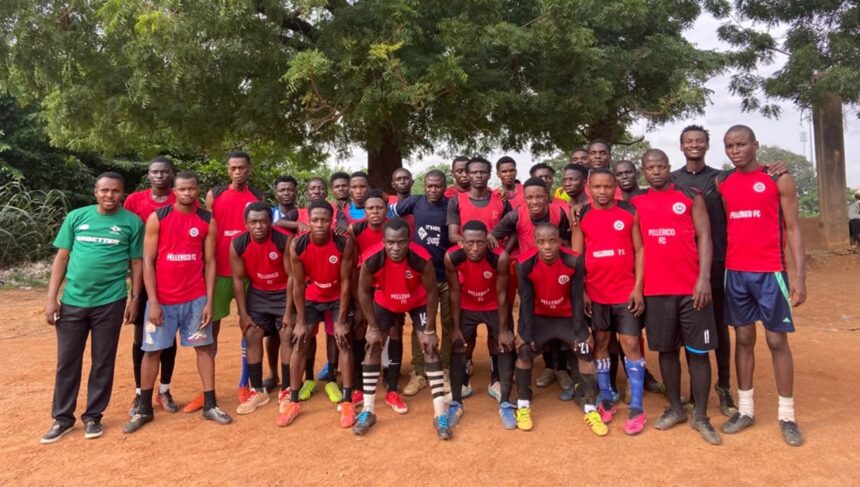
Coach Pele said Brighter Future was established in 2016 to give such players an opportunity to continue playing and developing their abilities, and that the club now has senior, junior and under-18 teams, with more than 80 young players involved in its under-18 programme.
According to him, the team has participated in competitions including the Inter-Sub Cup, Ramadan Cup, Apata/Bembow game, Afro competitions and tournaments organised at local government and state levels.
He said the club has won several trophies and recently participated in a football tournament in Ibadan before travelling to Lagos for a Champions League-style competition involving eight teams from different parts of Nigeria.
But he maintains that the funding for such programmes remains a challenge.
Coaches and players share the costs
Coach Pele said the club has no sponsor or regular financial backer, leaving coaches and players to contribute money whenever funds are needed.
Some players, he said, cannot afford football boots, while others leave after receiving opportunities from better-funded teams.
He said some players who passed through the programme have progressed to the Nigeria National League and other higher-level teams.
The coach also spoke about concerns among parents, particularly those with younger children, saying some are reluctant to allow their children to participate because of the situation in the country.
Keeping football and education together
Coach Samuel Filelo, known as Coach Sam, said his involvement in grassroots football was driven by a desire to help young people develop their talents and avoid wasting their potential.
He began gathering and training young players while working in a company and later continued the work as part of his interest in youth development.
According to him, some Brighter Future players have returned to school, while others have secured opportunities outside Nigeria.
He said the club works with schools and teachers to encourage players to remain committed to their education while pursuing football.
Coach Sam said the approach has changed the attitude of some players towards education and helped the club gain greater support from parents.
He added that the team has players from different religious backgrounds and that football has helped some of them change the direction of their lives.
Coaches bear the financial burden
Coach Sam said sponsorship remains one of the team’s biggest challenges and said he regularly spends his own money on players and the team’s participation in competitions.
He recalled one tournament that cost about N50,000, with players contributing between N1,000 and N2,000 each while he paid the balance.
The financial demands, he said, have also affected his family, with his wife sometimes questioning how much he spends on football.
He also explained the issue of medical care as another concern.
Coach Sam said the team has struggled to provide proper treatment for injured players but now keeps water and a first-aid box available during activities.
Despite the financial burden, he said he remains committed to the players and their development.
He recalled instances in which former players returned to thank him for his support, including one former player in Lagos who sent money to support the programme.
The coach also mentioned a player who dropped out of school but was encouraged to return and complete his education.
Coach Sam urged young people to stay away from illegal activities and drugs, discover their talents and work to develop them.
Building a pathway for young players
According to Coach Pele, for Brighter Future FC, the long-term goal is to create a more structured pathway for players at different stages of development.
He said the club hopes to attract sponsors and individuals willing to support the players and help expand the programme, and that the coaches also want to create more opportunities for players to travel abroad, develop professionally and pursue careers in football.
The club is working on a structure that will allow players at different levels to remain within the programme and progress according to their development.
According to Coach Pele, Brighter Future will serve as the main and professional team, while Pelerico will cater for average and junior players who can continue developing before eventually graduating to Brighter Future.
The aim, he said, is to ensure that players who do not immediately make the main team still have an opportunity to improve and remain within the programme.
For the coaches and players, the immediate need is straightforward: more support to keep young footballers training, competing and developing.
Without regular funding, however, much of that burden will continue to fall on the same players and coaches already struggling to keep their football ambitions alive.