

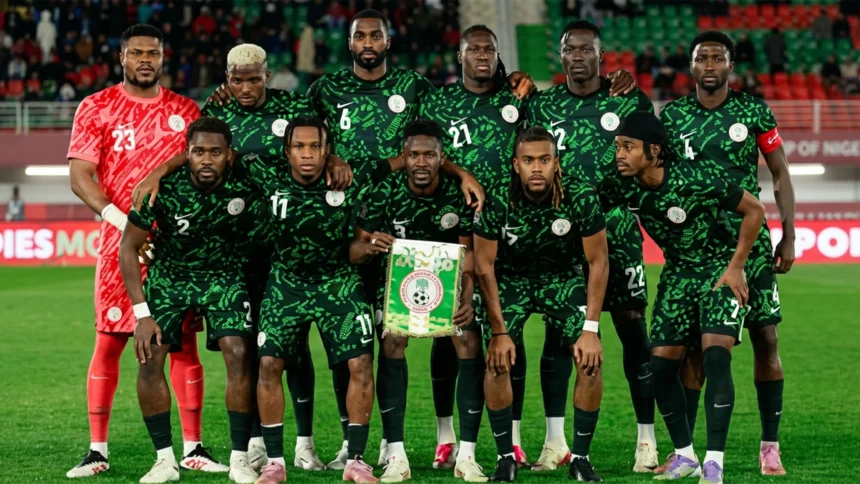
For a country that has produced generations of outstanding footballers, Nigeria’s relationship with the FIFA World Cup has been marked by as many missed opportunities as memorable appearances.
The Super Eagles have played at six World Cups since making their debut in 1994, reaching the Round of 16 three times. But before and after those appearances have come qualification failures that have left Nigerian football with some of its most painful memories.
As Nigeria marks 66 years of independence, six of those misses stand out: 1978, 1982, 1990, 2006, 2022 and 2026.
1978: The first big heartbreak
Nigeria came close to qualifying for the 1978 World Cup in Argentina.
The Green Eagles entered the final qualification match against Tunisia knowing that a draw in Lagos would be enough to secure a place at the tournament.
Instead, Tunisia won 1-0 after Godwin Odiye’s own goal in the second half, ending Nigeria’s hopes.
Years later, former captain Segun Odegbami argued that the failure was not simply about what happened on the pitch.
ALSO READ: Nigeria@66: Six historic sporting moments since 1960
He said administrators increased gate fees for the decisive match, leading to a poor turnout and a hostile atmosphere around the team. Odegbami also blamed last-minute administrative decisions for contributing to the failure.
For a generation led by players such as Odegbami, Christian Chukwu and Muda Lawal, the World Cup dream ended before Nigeria could make its debut.
1982: Algeria end another dream
Four years later, Nigeria again came within reach.
The Green Eagles had progressed through several rounds of qualifying before meeting Algeria in the final round for a place at the 1982 World Cup in Spain.
Nigeria lost the first leg 2-0 in Lagos before suffering a 2-1 defeat in Algiers.
The aggregate score ended another promising campaign, with Algeria advancing to the finals.
Odegbami later recalled that, with one match remaining, the coaching and administrative decisions surrounding the team had contributed to the setback.
Two opportunities had passed, and Nigeria was still waiting for its first World Cup appearance.
1990: Cameroon and another near miss
By 1990, Nigeria had developed another strong side, featuring players such as Stephen Keshi, Samson Siasia, Augustine Eguavoen and others who would later become central figures in Nigerian football.
The Eagles defeated Cameroon 2-0 in Ibadan but suffered a damaging 2-1 defeat to Gabon in Libreville.
Nigeria then lost 1-0 to Cameroon in Yaoundé, ending its hopes of reaching Italia ’90.
Former Nigeria international Sabinus Ikewuaku later recalled that a dispute over additional payments meant Nigeria travelled to Gabon without its first-choice goalkeeper and striker.
The result was another qualification campaign that slipped away despite a team that many believed had the quality to progress.
2006: The end of an era
By the time the 2006 World Cup qualifiers arrived, Nigeria had established itself as a regular participant.
The Super Eagles had appeared at the previous three World Cups, in 1994, 1998 and 2002, and qualification had become almost an expectation.
But Nigeria missed Germany 2006 after finishing behind Angola in their qualifying group.
Coach Augustine Eguavoen was blunt about what went wrong.
“We paid for underrating Zimbabwe and Angola by not qualifying for the World Cup,” he said at the time.
For Jay-Jay Okocha, who was approaching the end of his international career, the disappointment was particularly significant.
“It would have been nice to be there,” he said.
Nigeria had gone from making three consecutive World Cups to watching the tournament from home.
2022: Ghana’s away-goal blow
The 2022 qualification failure was different but equally painful.
Nigeria had Victor Osimhen, Wilfred Ndidi, Alex Iwobi and Kelechi Iheanacho among its leading players and entered the play-off against Ghana with a place in Qatar at stake.
The first leg in Kumasi ended 0-0.
Nigeria took the lead in Abuja through a William Troost-Ekong penalty after Thomas Partey had put Ghana ahead. But the match ended 1-1, allowing Ghana to qualify on the away-goals rule.
It was Nigeria’s first failure to qualify for the World Cup since 2006.
2026: Another generation misses out
The latest disappointment came with another team packed with established talent.
Osimhen, Ademola Lookman, Iwobi and Ndidi were among the players expected to lead Nigeria back to the World Cup.
After falling short in the qualifying group, Nigeria received another opportunity through the African play-offs.
The Super Eagles defeated Gabon 4-1 after extra time to reach the final, where they faced DR Congo in Rabat.
Nigeria took an early lead through Frank Onyeka, but Meschack Elia equalised. After 120 minutes, the match went to penalties, with DR Congo winning 4-3.
The defeat meant Nigeria would miss a second successive World Cup. For Osimhen, the disappointment was personal as well as national.
“I feel bad not playing at the World Cup… this is the second time in a row,” he said in June 2026.
A recurring story
From Odegbami’s generation to Osimhen’s, the names have changed, but the disappointment has remained familiar.
Nigeria has had teams capable of competing with the best in Africa, yet qualification has repeatedly been lost through a decisive defeat, a poor campaign, administrative problems, or missed opportunities.
At 66, the question is no longer whether Nigeria can produce talented footballers. It is whether future generations can avoid becoming another chapter in the long history of World Cup qualification failures.